
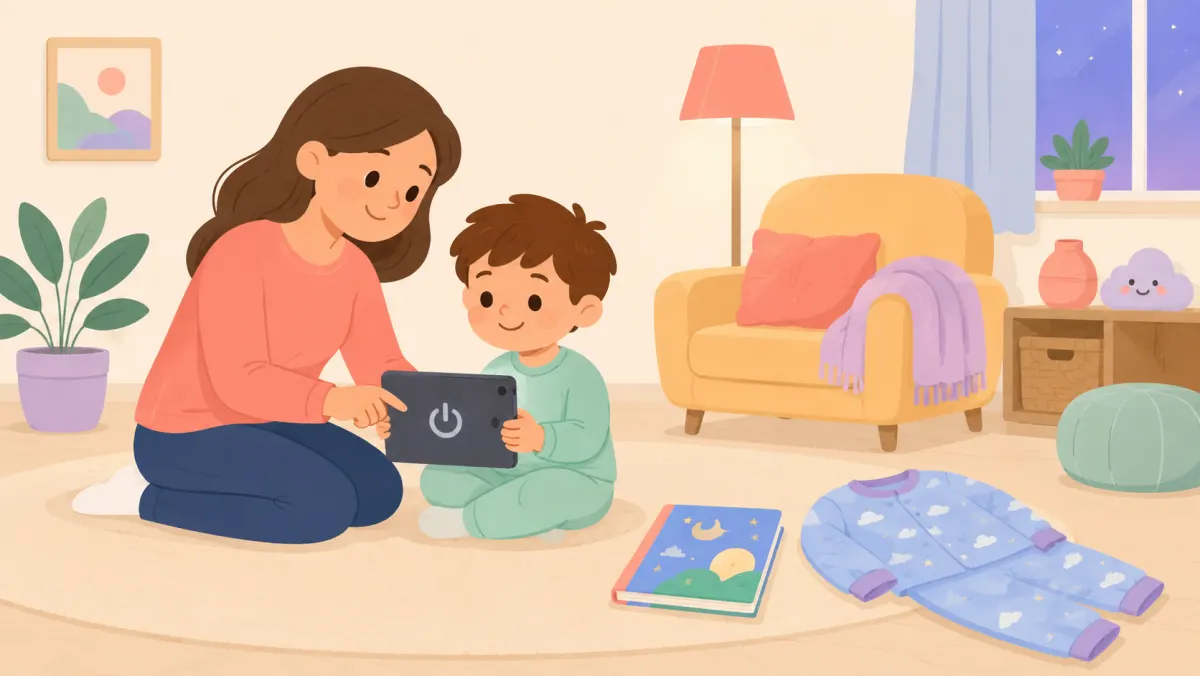
Why does screen time ending feel so hard?
The hardest part is often not the screen itself. It is the sudden switch from something absorbing to something ordinary, like brushing teeth or putting toys away. If your child is deeply focused on a game or video, a surprise ending can feel abrupt. That is why a calm warning before time is up can make the change feel less like something being taken away.
Try giving one clear reminder before the end, then keep your wording short when time is up. You might say that screen time is finished and name what comes next. Avoid starting a long debate in that moment. The goal is not to make your child happy about stopping every time. It is to make the ending predictable enough that they know what to expect.

What should I say before time is up?
Give a simple warning that connects the ending to a familiar next step. For example, tell your child that the show ends after this episode, then it is bath time. Younger children may do better when you point to a concrete stopping point they can see, such as the end of a song, video, round, or episode, rather than using a vague promise like soon.
Keep the warning neutral, not threatening. If the reminder sounds angry, your child may start reacting before the screen even goes off. A steady tone helps you hold the boundary without turning it into a power struggle. If your child asks for more time, repeat the plan once. You do not need to keep adding new reasons or negotiating every minute.
How can I make switching off easier?
Have the next activity ready before the screen ends. A snack at the table, pajamas on the bed, a favorite book, bath toys, or a simple drawing setup can make the transition more concrete. The next activity does not have to be exciting. It just helps when your child can move toward something instead of facing an empty gap after the device is put away.
You can also build a tiny ending ritual that stays the same each day. Turn off the device, place it in its usual charging spot, then move straight into the next part of the evening. Repetition matters because it removes some of the uncertainty. Over time, the routine itself can become the cue that screen time is finished and family life is moving on.

What if my child gets upset anyway?
Stay close and keep the limit in place. A child can be disappointed and still be safe, heard, and guided through the transition. You do not have to fix the feeling by giving the screen back. Name the frustration briefly, then return to the next step. Long explanations often add more fuel when your child is already upset and hoping the answer will change.
If yelling or crying starts, lower your own volume instead of matching it. Use fewer words and avoid bargaining. Once the moment passes, reconnect normally rather than turning the rest of the evening into a punishment. The next day, use the same warning and the same ending routine again. Consistency makes the boundary easier to understand, even when your child still dislikes it.
How do I set a limit tonight?
Choose one screen period and decide the stopping point before it begins. Tell your child what the limit is, what will signal the end, and what happens next. Keep tonight simple. You do not need a perfect family media plan before bedtime. One clear boundary that you can calmly follow is more useful than several new rules introduced all at once.
When the stopping point arrives, follow through the first time. Turn off the screen, move the device away, and begin the next routine. If you change the limit after repeated pleading, your child learns that the boundary may move. If you hold it kindly, the message becomes clearer. Tomorrow, repeat the same structure so the ending starts to feel familiar instead of surprising.
Parents also ask
Should I give a warning before screen time ends?
Yes. A clear warning can make the transition less surprising. Tie it to a concrete stopping point, such as the end of an episode or game round, then remind your child what comes next. Keep the message calm and brief.
What if my child keeps asking for five more minutes?
Repeat the original plan once instead of starting a new negotiation. If the limit changes after repeated requests, your child may keep testing it. A calm, consistent response makes the boundary easier to understand, even when your child is disappointed.
Should I take the device away during a meltdown?
If the agreed screen time has ended, you can calmly put the device in its usual place and stay nearby. Use few words, avoid arguing, and move toward the next routine once your child is ready. The goal is a steady boundary, not a bigger confrontation.
Practical ideas from our team, not medical advice. For anything about your child's health, sleep, or development, please check with your pediatrician.
Turn today's idea into their own story
Make a 1-minute animated story where your child is the hero.
Start A Story