
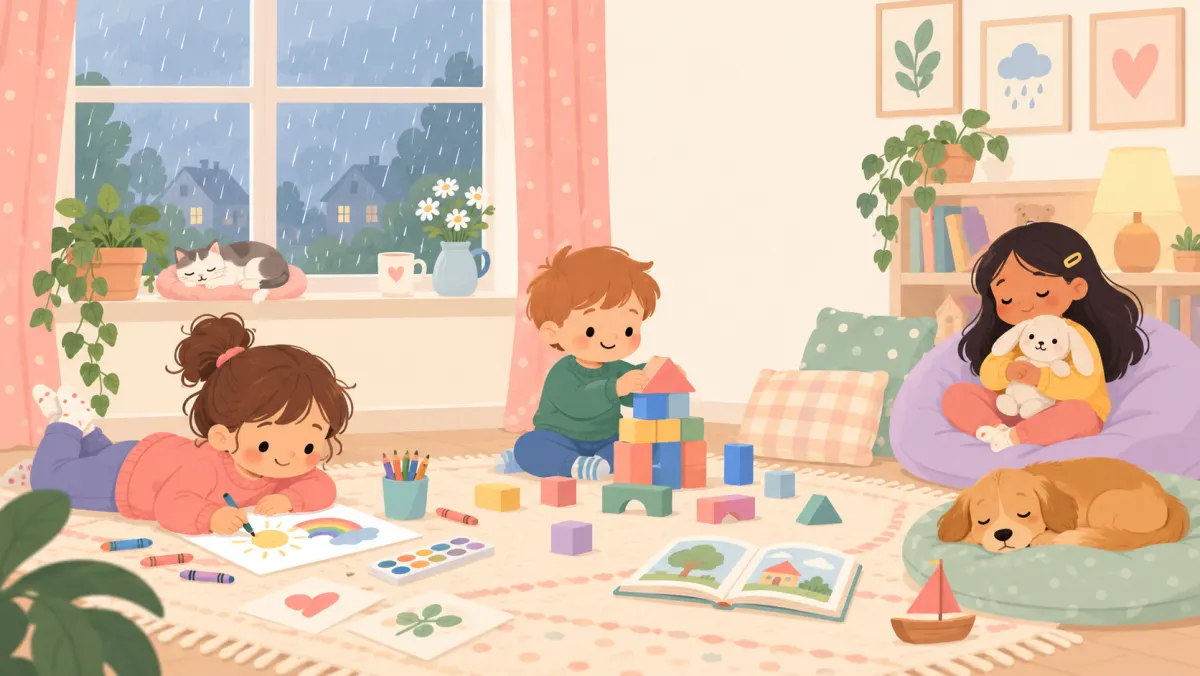
What can kids do on rainy days?
A rainy afternoon feels easier when children have a short list of ideas ready. Try a living room obstacle course, a blanket fort, a drawing challenge, or a pretend store using toys and safe household items. These activities give children a clear starting point while leaving plenty of room for imagination, movement, and their own creative changes.
Let your child choose between two or three options instead of asking what they want to do. A small choice feels manageable and helps them start playing without a long discussion. You can also join for the first few minutes, then step back while they continue building the game in their own way.
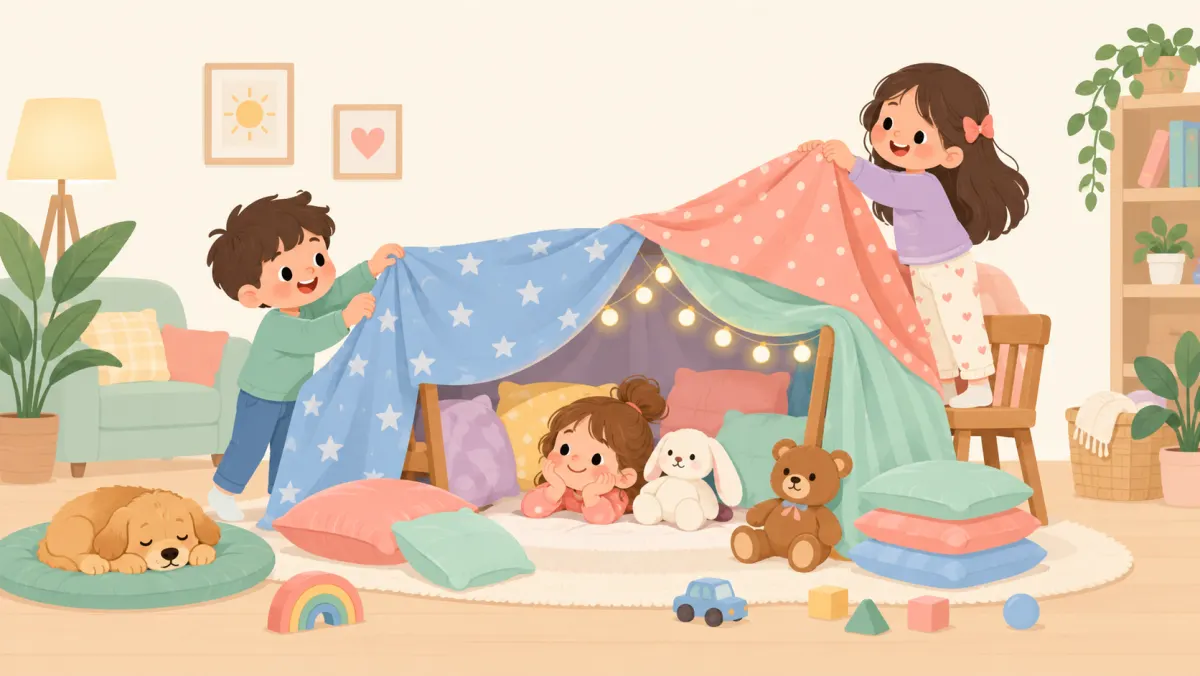
How do I plan screen free activities?
You do not need a complicated schedule to make screen free activities for kids work. Gather a few supplies before the afternoon begins, such as paper, crayons, blocks, books, and dress up items. Keeping these choices easy to reach can reduce boredom and make it simpler for children to begin playing independently.
Create a simple rhythm with active play, a quieter activity, and a snack break. This gives the afternoon shape while still leaving room for children to change direction and explore. A flexible plan works better than a strict timetable because kids often discover new games once they start using their imagination.
What rainy day crafts are easy?
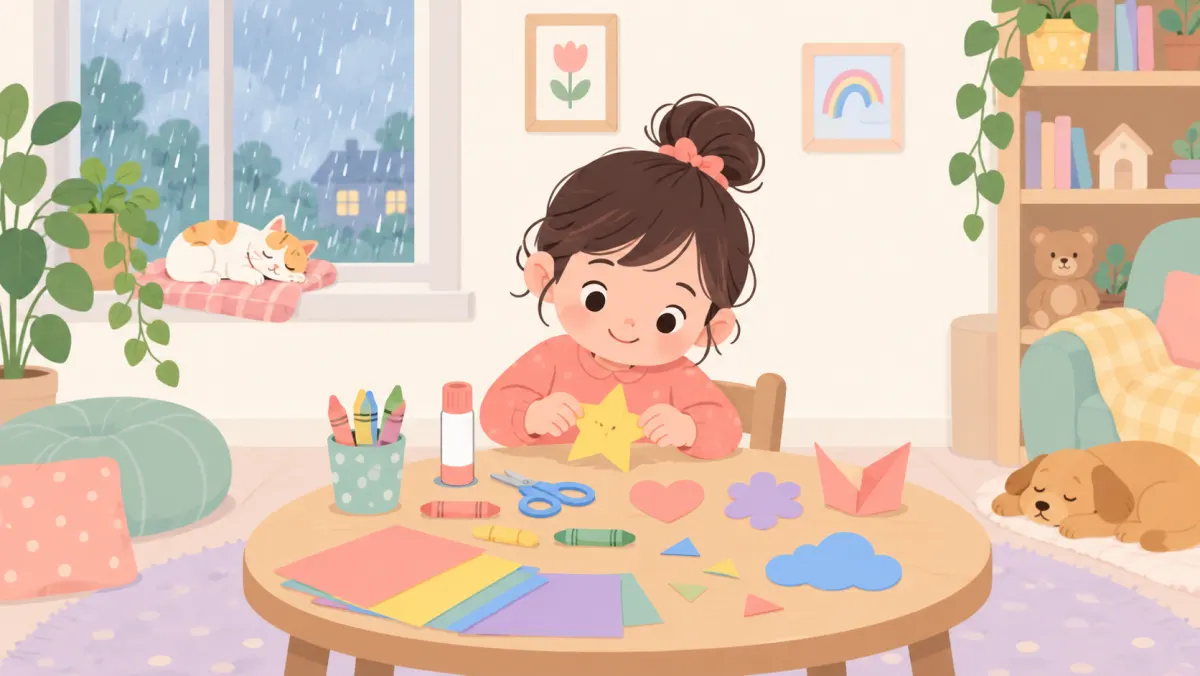
Easy crafts are often the ones children enjoy returning to later. Paper animals, homemade cards, cardboard creations, and sticker scenes can all start with basic supplies already at home. These projects allow children to make something personal while practicing patience and enjoying a calm activity during a quiet indoor afternoon.
Set up a small craft area where mess is expected and cleanup is simple. A tray or table covering can make it easier for children to experiment without worrying about making mistakes. Keep extra paper and supplies nearby so they can continue creating when a new idea appears.
How can siblings play together inside?
Siblings often need help finding a shared activity when they have different interests. Try team challenges like building a fort, creating a story together, or making a pretend restaurant with roles for everyone. Giving each child a part in the game can help them feel involved and valued.
If disagreements happen, offer a fresh idea rather than trying to solve every detail. A new mission, game rule, or creative challenge can help children reconnect and continue playing. Sometimes a small change in the activity is enough to bring back cooperation and excitement between siblings.
How do I make rainy days special?
A rainy afternoon can become a memory when you add a small tradition. Try a cozy reading corner, a family drawing time, a homemade snack project, or a story where your child becomes the main character. Small rituals can make ordinary days feel different and give children something to look forward to.
These moments do not need special equipment or perfect planning. Children often remember the feeling of being together more than the activity itself, so keep the focus simple and warm. A rainy day can become a chance to slow down, share attention, and enjoy creative time as a family.
Parents also ask
How do I keep my child busy without a screen?
Start with a few prepared choices like crafts, building, pretend play, or movement games. Children often need a starting point, not a full schedule. Keep supplies visible and let them take the lead once play begins.
What are easy screen free activities for kids at home?
Try activities that use things you already have, such as drawing, reading, making forts, sorting toys, or creating pretend games. Simple ideas are often easier to repeat and enjoy on many rainy afternoons.
How long should a rainy day activity last?
There is no set time that works for every child. Some activities may hold attention for a few minutes, while others can continue much longer. Offer breaks and let children move between different types of play.
Practical ideas from our team, not medical advice. For anything about your child's health, sleep, or development, please check with your pediatrician.
Turn today's idea into their own story
Make a 1-minute animated story where your child is the hero.
Start A Story