
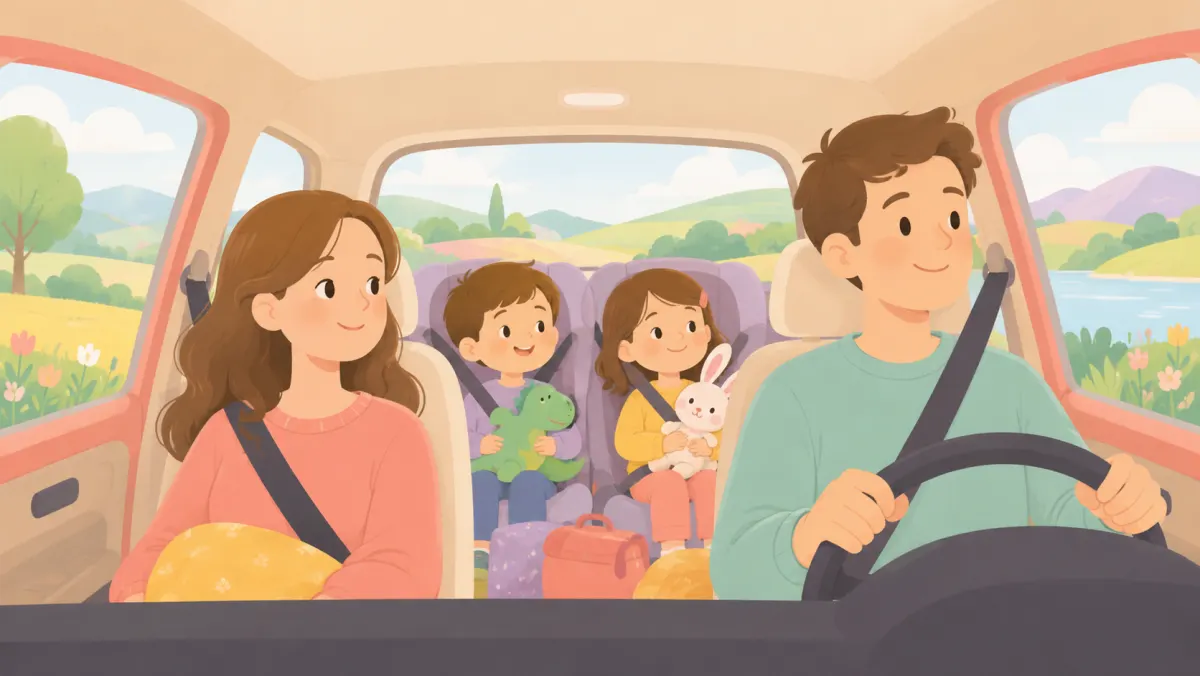
How Do I Plan Car Trip Stops?
Before you leave, choose a few likely stopping points instead of promising yourself you will push through. Small children usually handle a trip better when they know a bathroom, stretch, and snack break is coming. Look for simple places with restrooms and room to move. Save the addresses offline in case cell service drops, and keep one backup stop between your planned ones.
Try to stop before everyone is desperate. A child who is already hungry, cramped, or yelling is harder to settle than one who gets a break a little early. At each stop, keep the routine simple: bathroom, movement, water, then back in the car. Avoid turning every stop into a long event, because restarting can become harder than the break itself.
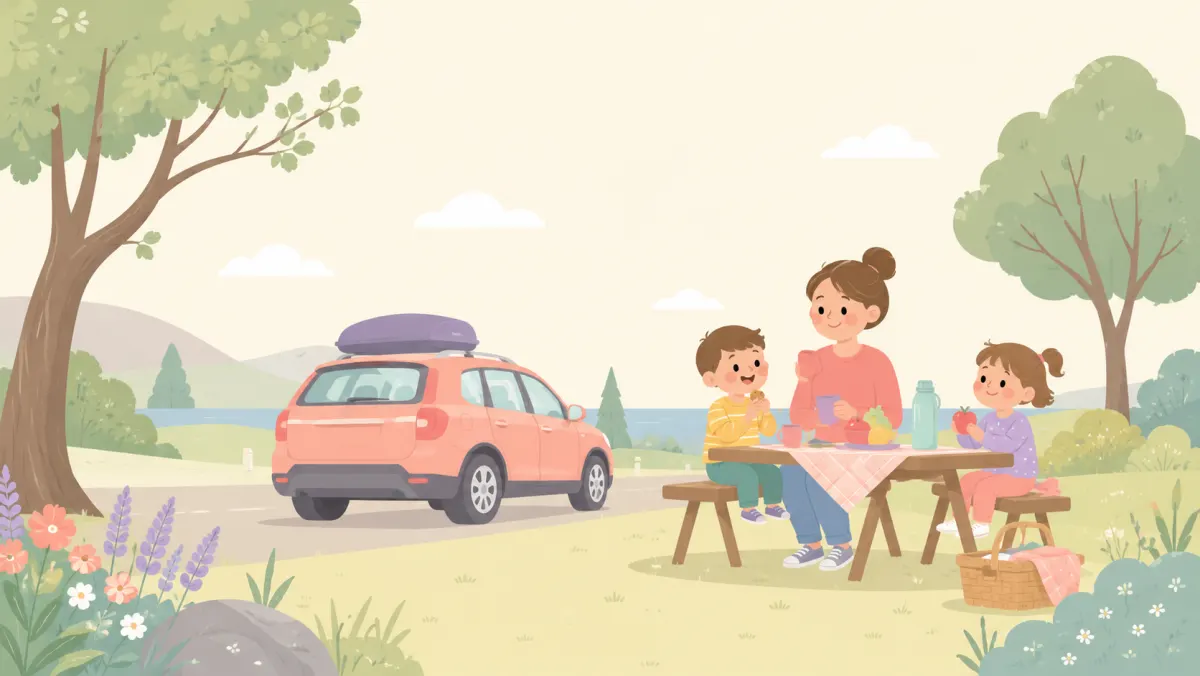
What Should Kids Eat in the Car?
Pack familiar foods that are easy to hold, low in mess, and not likely to melt or crumble everywhere. Put small portions into separate containers so you can hand over one thing at a time. Water is usually easier to manage than sticky drinks. Keep a trash bag, wipes, and extra napkins within reach so spills do not become a major roadside cleanup.
Use snacks as part of the trip rhythm, not as a nonstop distraction. Offering food every few minutes can leave children bored with snacks when you actually need them. A planned snack after a stretch break or during a quieter part of the drive gives the day some structure. For very young children, choose foods and seating routines that match how you normally keep meals and snacks safe.
Which Car Activities Actually Keep Kids Busy?
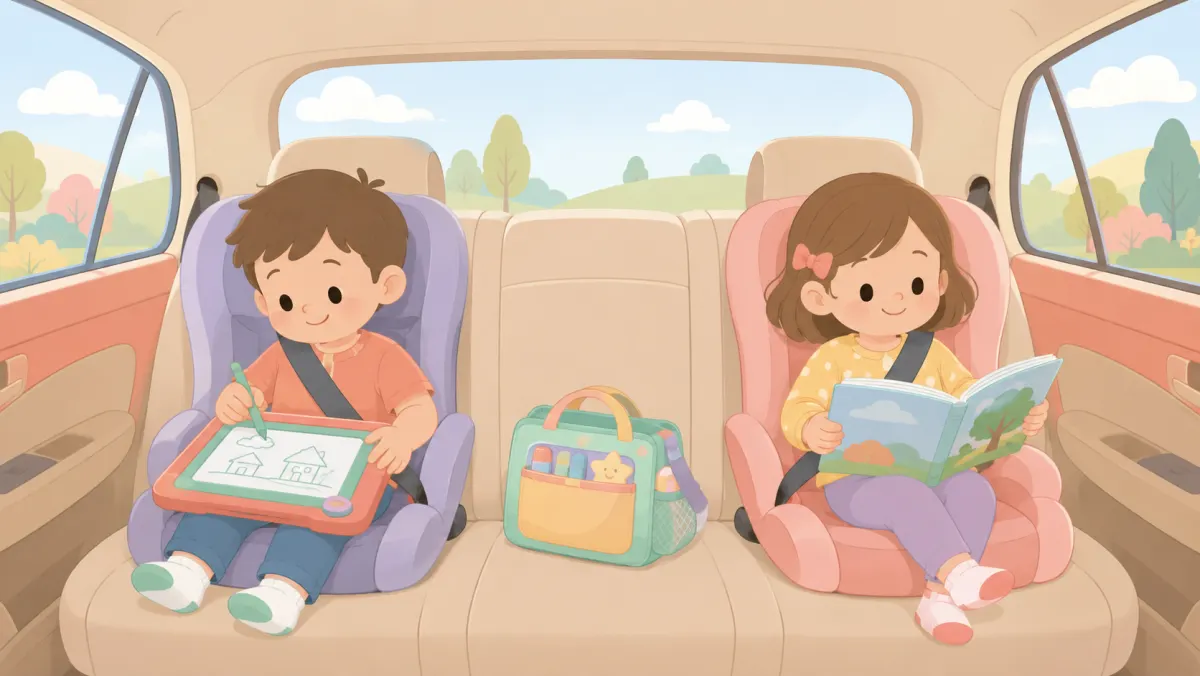
Bring a small mix of activities instead of one giant bag of toys. Good choices include reusable sticker scenes, magnetic drawing boards, simple seek-and-find books, soft toys, and a few favorite picture books. Keep most of them hidden at first. Hand out one activity when attention starts fading, then switch only after it has had a fair chance to work.
For siblings, individual activity bags can prevent arguments over who gets what. You can also use easy verbal games, such as spotting a certain color, finding trucks, making up silly stories, or taking turns choosing songs. Screens can be part of the plan if they work for your family, but downloading shows or games before leaving avoids relying on a strong signal.
How Can I Prevent Backseat Meltdowns?
Start by lowering the goal. A successful long drive does not mean everyone stays cheerful and quiet for hours. Expect some whining, boredom, repeated questions, and requests you cannot meet immediately. Tell children the simple plan before leaving, including when you expect to stop and what they can do in the car. Predictability helps the trip feel less endless.
When tension rises, change one thing before trying to fix everything. Offer water, switch the music, start a spotting game, open a new activity, or say how much longer until the next stop. Keep your own responses short and calm. Long explanations rarely help when a child is tired of sitting. If the whole car feels wound up, make the next safe stop sooner.
What Should I Pack for Car Trip Emergencies?
Keep one easy-to-reach bag for problems you may need to solve quickly. Include wipes, tissues, a change of clothes for each small child, plastic bags for wet items, basic cleanup supplies, water, and a few extra snacks. Add any everyday items your family normally needs away from home. Do not bury this bag under suitcases where you cannot reach it.
Also keep a comfort kit within arm's reach. A familiar blanket, favorite soft toy, spare pacifier if your child uses one, and a downloaded bedtime playlist can make a late stretch feel more normal. Bring a phone charger and save important route details offline. The goal is not to prepare for every possible problem. It is to make the common annoying ones quick to handle.
Parents also ask
How often should we stop on a long car trip with kids?
There is no single perfect interval for every family. Plan regular opportunities for bathrooms, movement, food, and a reset, then stop sooner when the back seat is clearly struggling. It is usually easier to take a short early break than recover after everyone is overwhelmed.
What are the best screen-free activities for a long drive?
Try reusable sticker scenes, magnetic drawing boards, seek-and-find books, soft toys, picture books, songs, and simple spotting games. Bring only a few at a time. Holding some activities back makes them feel fresh later, when boredom usually gets harder.
How do I handle constant questions about when we will arrive?
Give children a simple milestone they can understand, such as the next rest stop, snack break, or town. Avoid giving a new time estimate every few minutes. Repeating the same short answer keeps you calmer and gives them one clear point to wait for.
Practical ideas from our team, not medical advice. For anything about your child's health, sleep, or development, please check with your pediatrician.
Turn today's idea into their own story
Make a 1-minute animated story where your child is the hero.
Start A Story