
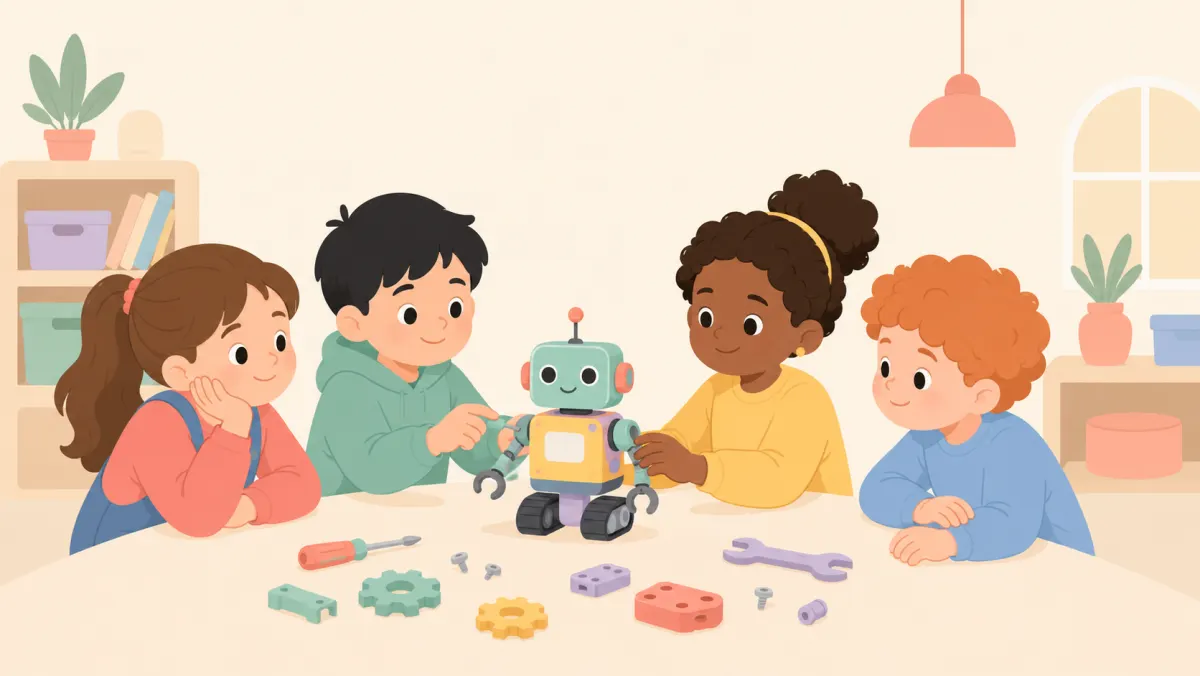
What do kids learn from robotics teams?
A kids robotics team gives children a shared problem that rarely works perfectly on the first try. A wheel slips, a sensor reads badly, or a program sends the robot the wrong way. Because the problem belongs to the group, children get practice saying what happened, listening to another idea, and deciding what to change without turning one mistake into a personal failure.
That process can matter as much as the finished robot. Children see that a teammate can be wrong and still be useful, and that their own idea can fail without making them the weak link. When adults keep the focus on the next test instead of blame, the team learns to treat mistakes as information. That makes persistence feel practical instead of heroic.
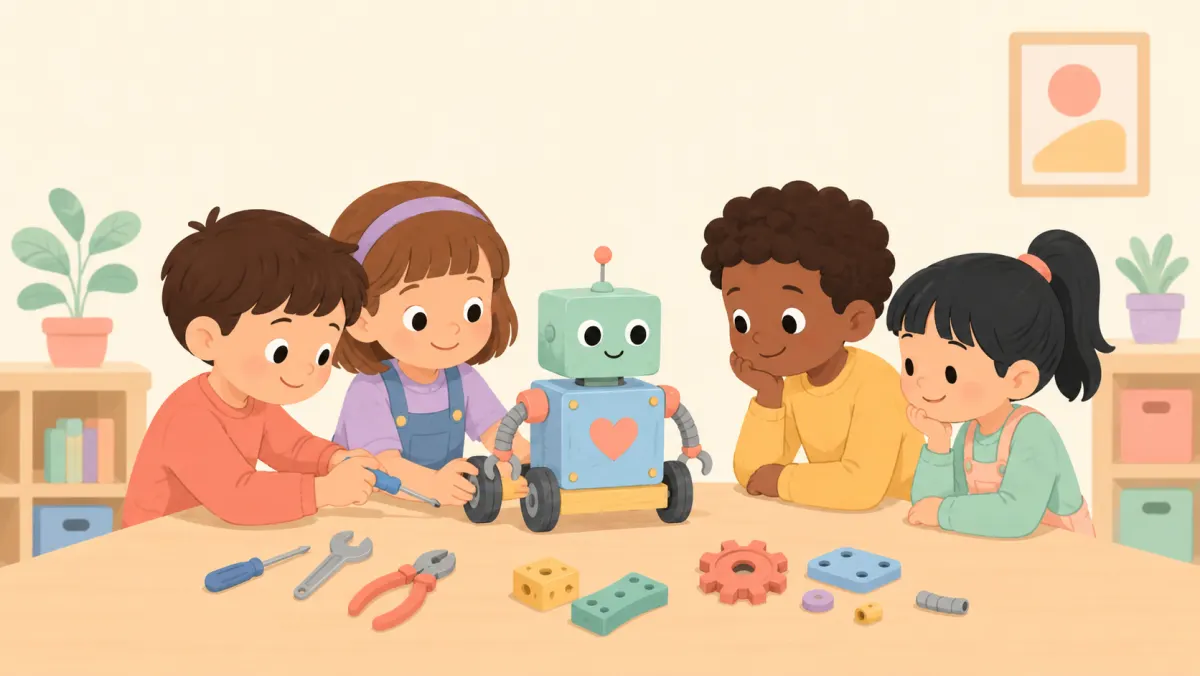
Why is failure useful in robotics?
Robotics makes failure visible and specific. If the robot misses a turn, the team can look at the code, the build, the timing, or the setup and test one change at a time. Children do not have to guess whether something worked. They can see the result, adjust it, and try again, which turns disappointment into a problem they can act on.
This is different from simply telling a child to keep trying. The team has a concrete reason to try again because each test gives new information. Children may begin to separate the sentence our design failed from the sentence I failed. That small shift can make it easier to stay involved, ask for help, and return to a hard task after a setback.
How do robotics teams handle mistakes?
Good team habits make mistakes easier to manage. Children can pause after a failed test, describe what they noticed, and choose one change before running the robot again. Giving each child a job, such as building, coding, testing, or checking materials, also helps the group see that success comes from many connected tasks rather than one person being the star.
Parents can reinforce the same pattern at home by asking calm, specific questions. What did the robot do? What did you expect it to do? What will your team try next? Those questions keep attention on the work instead of who caused the problem. They also give children language for disagreement that is more useful than arguing over whose idea was right.
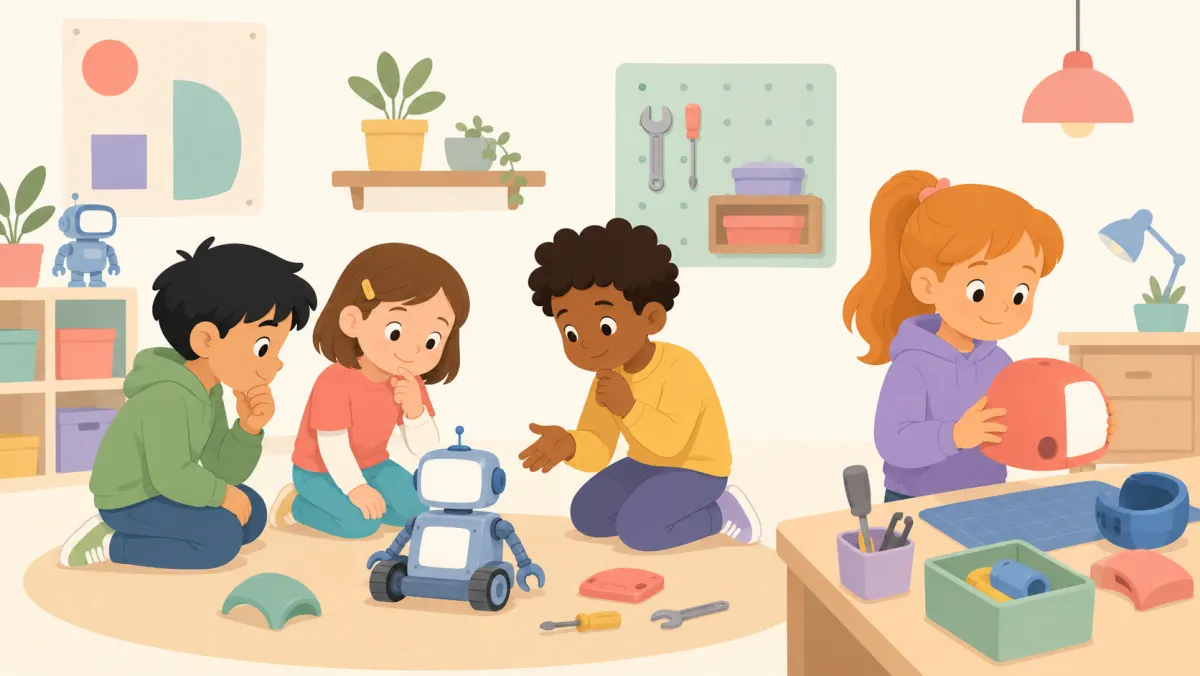
What if my child hates losing?
A child who dislikes losing may still enjoy robotics because the goal is often repeated improvement, not one perfect attempt. Parents can help by praising careful testing, useful questions, and honest feedback between teammates. It also helps to avoid turning every meeting into a scorecard about winning, rankings, or who was best, especially when the child is already frustrated.
After a rough session, keep the conversation simple. Ask what part was hardest, what the team changed, and whether anyone helped in a useful way. If your child is upset, you do not need to force a lesson immediately. Once the emotion has settled, a short conversation about the next possible step can make failure feel temporary and manageable.
How can parents support robotics teamwork?
Parents can support a robotics team without solving the project for the children. Show interest in the process, ask how the group made decisions, and let your child explain a problem before offering an answer. If you attend meetings or events, resist the urge to fix a loose part or rewrite code unless the team leader specifically asks adults to step in.
At home, make room for the social side of the experience too. Children may need help talking through a disagreement, sharing credit, or recovering when a teammate rejects their idea. You can model phrases such as let us test both ideas or what evidence do we have. The goal is not to remove conflict, but to help children stay respectful while they solve it together.
Parents also ask
Is a kids robotics team only for children who like coding?
No. Robotics teams can involve building, testing, organizing materials, explaining ideas, and solving practical problems as well as coding. A child may discover that their favorite role changes over time. The team experience can be valuable even if programming is not the part they enjoy most.
Should I step in when my child's robot keeps failing?
Usually, it is more helpful to ask questions than to fix the robot yourself. Ask what the team has tested, what changed, and what they want to try next. If an adult leader is guiding the activity, follow that structure and let the children own as much of the problem solving as possible.
What can my child learn from a robotics competition?
A competition can give a team a clear goal and a chance to practice working under pressure, but the result is only one part of the experience. Children can also learn how to prepare together, respond to unexpected problems, share responsibility, and treat another team's success with respect.
Practical ideas from our team, not medical advice. For anything about your child's health, sleep, or development, please check with your pediatrician.
Turn today's idea into their own story
Make a 1-minute animated story where your child is the hero.
Start A Story