
How do I start independent play?
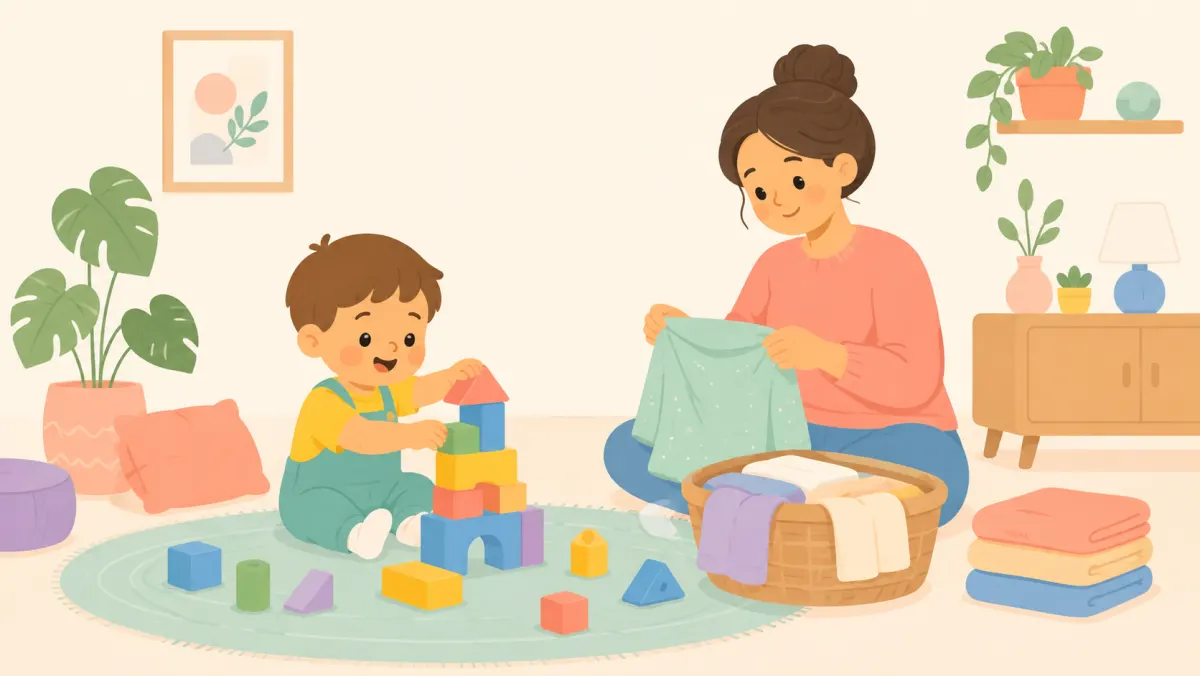
Start with a small, familiar activity instead of asking your toddler to play alone with a whole room of toys. Set out three or four simple choices, such as blocks, toy animals, stacking cups, or a small puzzle. Sit nearby for a minute, show interest, then say you are going to do a short task while they keep playing.
Choose a time when your child is fed, rested, and not already upset. Keep the first attempt brief enough to feel successful. You might fold a few towels, wipe the counter, or make tea within sight. When you return your full attention, notice what they did rather than praising how long they lasted.
How long should solo play last?
There is no perfect number of minutes that every toddler should manage. Start with what your child can handle calmly today, even if that is only a few minutes. A short stretch of happy play is more useful than pushing until everyone is frustrated. Stop while the experience still feels positive, then try again later.
As solo play becomes familiar, add time slowly instead of making a big jump. You can finish one small household task before checking in, then gradually choose a slightly longer one. If your child comes looking for you, reconnect briefly, help them restart, and treat that as part of learning the routine.
What toys work best for independent play?
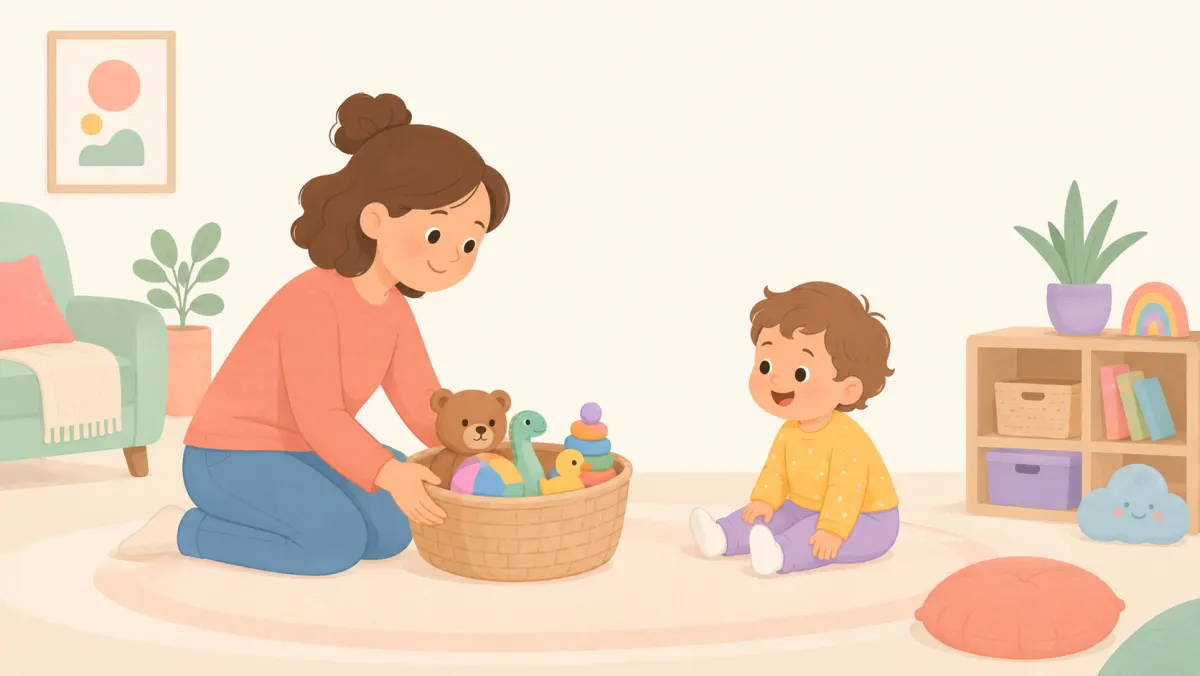
Choose toys that are easy to understand and can be used in more than one way. Blocks, chunky figures, toy vehicles, nesting cups, pretend food, crayons with paper, and simple matching toys can keep a toddler engaged without needing constant instructions. Too many options can make it harder to settle into one activity.
Rotate a small group of toys instead of putting everything out at once. A basket with four or five familiar items can feel fresh when it returns after a few days. For tonight, pick toys your child already knows how to use. Independent play is easier when they are not also trying to learn complicated rules.
What should I say when they call me?
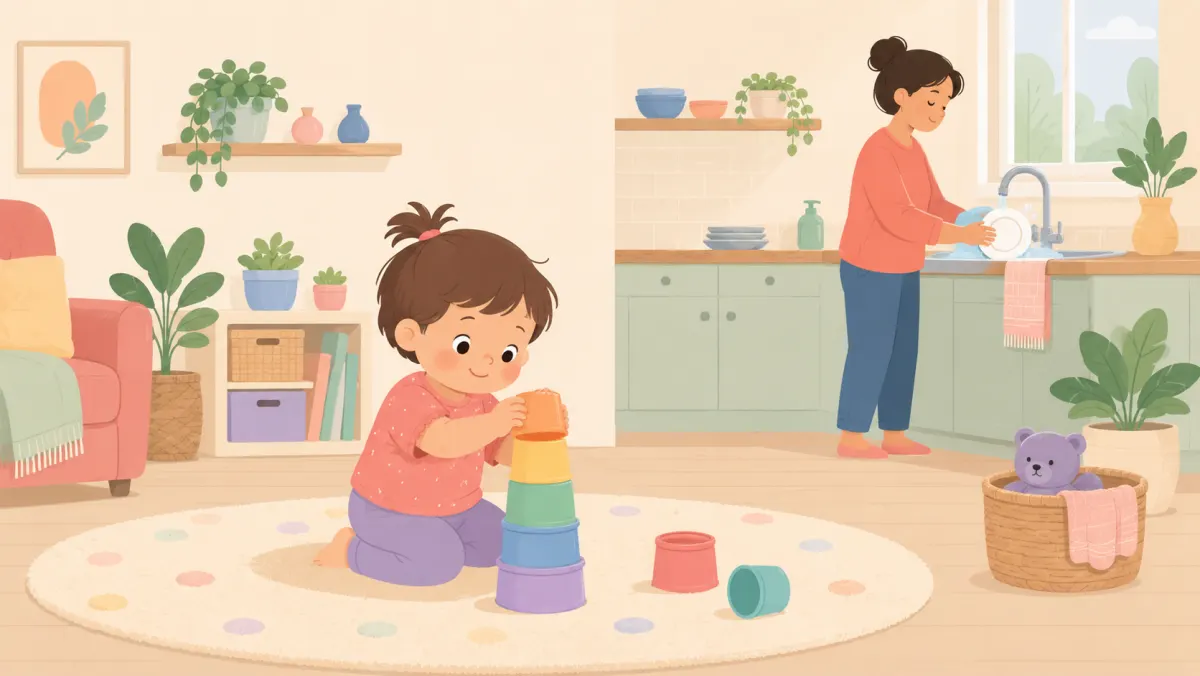
Answer warmly without immediately taking over the activity. Try a simple line such as, I am right here, you can keep playing while I finish this. If your child needs help opening, reaching, or fixing something, help with that one problem, then hand the play back instead of staying to direct every next step.
You can also give a clear return point your toddler can understand. Say, I will come see your tower after I put these dishes away, or I will sit with you when I finish folding this pile. Keep the promise. Predictable check-ins make it easier for a child to trust that playing alone does not mean losing your attention.
How can I make this work tonight?
Pick one calm ten to fifteen minute window before the evening gets busy. Put a small play setup near where you need to be, remove obvious distractions, and tell your child what you are doing. Stay close enough to be available, but resist narrating, correcting, or suggesting a new idea every few seconds.
When the play ends, reconnect on purpose. Sit down, look at what they made, or let them show you one favorite part. Then put the toys away together and repeat the same basic routine tomorrow. Consistency matters more than making tonight perfect. A familiar pattern helps solo play feel like an ordinary part of home life.
Parents also ask
What if my toddler follows me instead of playing?
Bring the play closer to where you are and shorten the first attempt. You can sit nearby, begin the activity together, then shift your attention to one small task. If they follow you, reconnect briefly and try again without treating it like a failure.
Should I use a timer for independent play?
You can, but it is not required. Some toddlers respond better to a simple event they can understand, such as while I fold these towels. If you use a timer, keep it calm and predictable, and avoid turning solo play into a test they have to pass.
What if my child gets bored right away?
Boredom does not always mean you need a new activity. Give them a little space to decide what to do next. If they stay stuck, offer one small prompt, such as asking what their toy animal needs, then step back and let them continue.
Practical ideas from our team, not medical advice. For anything about your child's health, sleep, or development, please check with your pediatrician.
Turn today's idea into their own story
Make a 1-minute animated story where your child is the hero.
Start A Story